All articles · · By Steve Lewis
Make a Morning Routine Chart for Children Aged 3–8
Getting ready can involve many little tasks: finding clothes, eating breakfast and checking a bag. To a grown-up, the order may seem obvious. A child may need to see what comes next. A homemade picture chart gives you something simple to look at together. Start with one part of the morning rather than trying to organise the whole day.
Start with a short list that fits your family
Choose three to five steps that actually belong in your morning. You might use: get dressed, eat breakfast, brush teeth, check the bag and put on shoes. Change the order to suit your household. If breakfast is already easy but leaving the house is difficult, make a chart just for the final three steps.
Ask your child what they notice about getting ready: “What do we look for just before we leave?” Listen for practical problems. A missing coat needs a place to live; it does not necessarily need another reminder. Keep adult responsibilities, such as checking medicine or arranging transport, with the grown-up.
Draw one clear picture for each step
Use a sheet of paper and divide it into large boxes. Draw a T-shirt for getting dressed, a bowl for breakfast, a toothbrush, a bag and a pair of shoes. Simple drawings are enough. You can write one or two words under each picture, but your child does not need to read the labels to use the chart.
Let your child help choose or draw the pictures. If a drawing is unclear to them, change it. Put the chart somewhere they can see it comfortably, without needing to climb. A reusable tick beside each box is optional; pointing to the next picture works too.
Try it when nobody is rushing
Look at the chart together at a quiet time. Say, “Let’s see whether our pictures show what we need.” Walk through the steps or pretend to do them. If your child spots something missing, add it together.
The first real morning is a trial, not a test. Point to one picture and ask, “What do we need for this bit?” Offer help rather than repeating the entire list. If five steps feel like too much, cover the later boxes or start with just two.
Give your child a manageable part
A younger child might choose between two suitable tops or put one item beside their bag. An older child might check that their named water bottle and reading book are ready. Choose the job around the individual child, not simply their age.
Keep the support they need available. Sitting down to get dressed, using larger pictures, hearing the steps spoken aloud or having an adult complete part of a task are all possible adaptations. The chart is a shared guide, not a rule that a child must manage alone.
Connect preparation to a Bible story
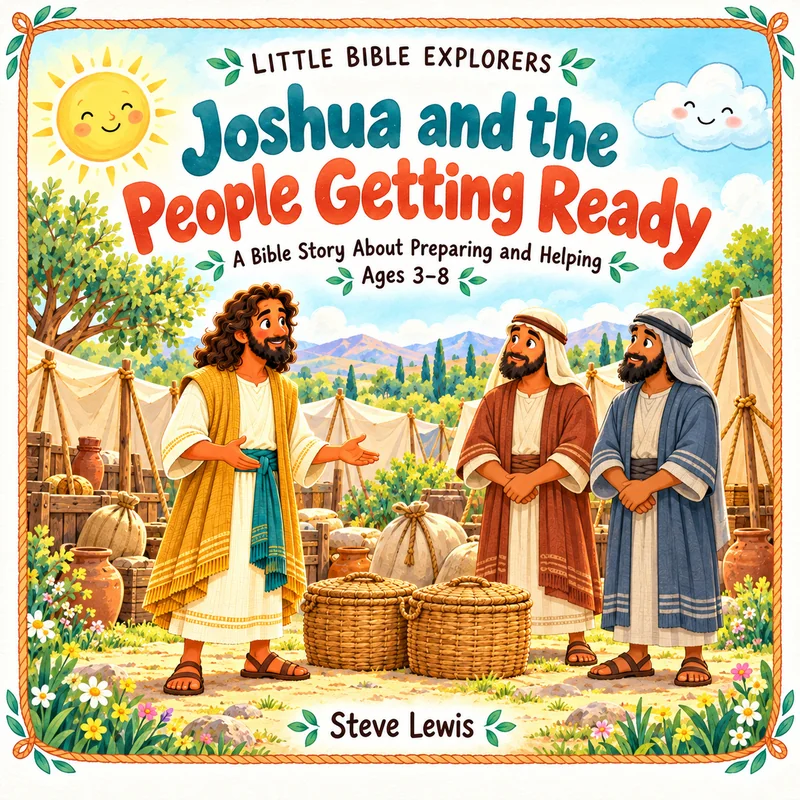
In Joshua and the People Getting Ready, Eli, Maya and Mum read selected parts of Joshua 1:10–18. The current book description explains that Joshua’s message asks the people to prepare food before crossing the River Jordan. Separate fictional garden scenes show Eli and Maya choosing small packing jobs with Mum before a family walk.
The digital edition also lists My Getting-Ready Pictures and A Little Job Together among its activities. The morning chart in this article is an additional idea for home, not a reproduction of the book’s activity pages.
Before sharing the story, read the grown-up notes: the selected passage mentions military support, and the notes explain the wider conquest context and an omitted threat in verse 18. Do not turn a getting-ready conversation into a demand for unquestioning obedience. A child can ask why, say a job is unclear and seek help.
Review the chart without turning it into a scorecard
After a few mornings, ask, “Which picture helped? Which bit needs changing?” You may discover that shoes need a regular place or that the bag is easier to check the evening before. Change the surroundings as well as the chart.
A missed box is information, not a judgement about your child. If mornings remain difficult, simplify the plan and share the tasks. The aim is a useful conversation about what comes next, not a perfect row of ticks.
Choose one small step to try tomorrow
Start with a drawing of the one task your child most often asks about. Add another only if it is useful. You can keep the picture, redraw it or stop using it when it no longer helps.
For a shared-reading companion about preparation and manageable helping jobs, explore Joshua and the People Getting Ready. Its book page includes the current description, grown-up guidance and digital edition purchase link.