Confidence & belonging · · 5 minute read
How to Help Children Feel Proud of Their Natural Hair Through Stories
A child’s hair is part of how they meet the world. Warm words, joyful pictures and relaxed reading time can help children see their curls, coils, locs, braids and afros as something to understand, care for and celebrate.
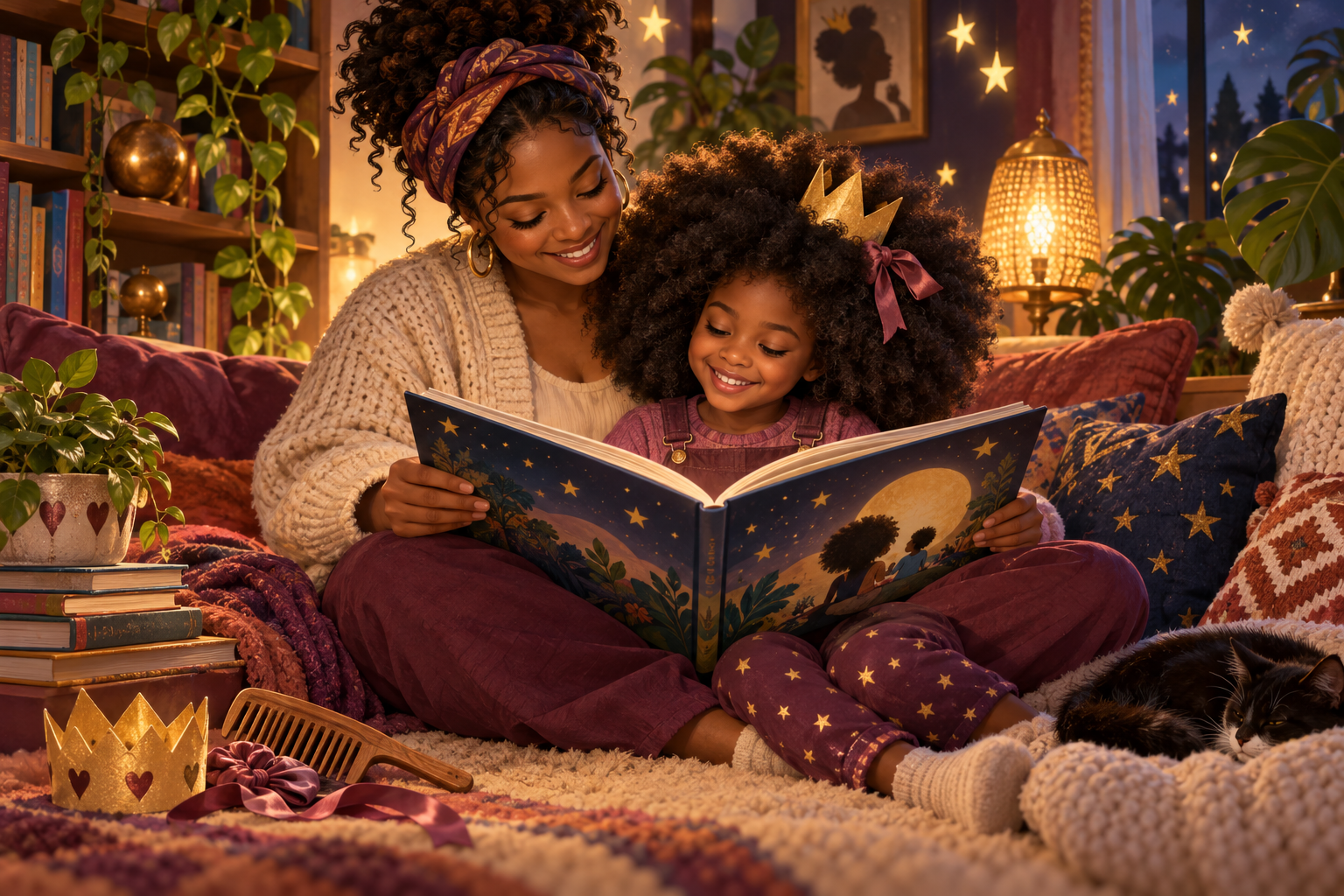
Children notice which characters appear in books and how those characters are described. When natural hair is shown as ordinary, beautiful and full of possibility, a story can begin a gentle conversation about identity and belonging.
You do not need to turn every reading session into a lesson. Start with enjoyment. Let your child look, laugh, wonder and choose what they want to talk about. The ideas below can be used with any affirming picture book, including Kofi’s Magnificent Afro Adventure.
1. Choose stories where natural hair belongs
Look for books in which Black children have different hair textures and styles while enjoying adventures, family life, celebrations and everyday play. Representation matters in stories about hair, but it also matters when hair is simply one natural part of a fully rounded character.
Before reading, explore the cover together. Ask, “What do you notice about this character?” If your child mentions the hair, follow their lead. If they notice the smile, clothes or background first, that is equally valuable. Pride grows best when children are seen as whole people.
2. Use specific, positive words
Try words that describe rather than judge: soft coils, springy curls, neat braids, a full afro or shiny locs. Add feeling words when they fit: joyful, bold, creative, cared for or proudly chosen. Avoid language that suggests natural hair must be “fixed” before it can be admired.
Ask your child which words they like. One child may call their hair fluffy; another may prefer curly, coily or simply beautiful. Giving children room to name their own experience shows that their voice matters.
3. Read the pictures slowly
Pause on an illustration that shows hair clearly. Notice shape, movement, colour and detail. You might ask, “How did the illustrator make the curls look bouncy?” or “Which part of this picture feels most joyful?” There is no answer to get right.
This kind of picture talk makes story time playful and lets a child find their own evidence. Our six gentle story-time questions offer more prompts you can use without turning reading into a test.
4. Make a crown of kind words
Cut a simple crown shape from paper or draw one on a page. Invite family members to add truthful, encouraging words about the child—not only about appearance. “Curious”, “kind”, “funny”, “patient” and “brave” can sit beside “beautiful curls” or “creative style”.
The aim is not to pressure a child to perform confidence. If they feel shy, let them decorate the crown with colours and shapes instead. You can model the activity by choosing a kind word for yourself.
5. Let children have choices
Hair care can feel easier when children know what will happen and have small choices. They might choose the ribbon colour, select between two suitable styles, hold the book or decide which page to revisit. A favourite audiobook or story can also make a long routine feel more familiar.
Keep the choice genuine and age-appropriate. The grown-up still handles safe care, while the child gets a voice in the parts that can be flexible.
6. Prepare a calm answer to unkind comments
If someone makes an unkind remark, a child may need reassurance before a long explanation. A simple response can be: “Your hair is yours, and it deserves kindness.” Later, ask what happened, how it felt and what support they would like.
Stories can help you practise possible replies through a character: “What could Kofi say?” or “Who could help?” Keep the responsibility where it belongs. A child should not have to prove that their natural hair is worthy of respect.
Turn hair time into connection time
A regular routine can become a small family ritual: choose a story, gather the care tools, offer a comfortable seat and end with a positive observation. It does not need to be perfect or elaborate. Consistency, gentleness and listening matter more than a picture-ready result.
Most of all, let children see natural hair connected with laughter, imagination, family history and everyday love. One affirming book cannot answer every question, but it can open a door—and give your child a story in which they feel at home.
Explore Kofi’s Magnificent Afro Adventure → Browse all books →