Festival reading · · 6 minute read
Chinese New Year Activities for Children: Read, Make and Move Together
A picture book can turn Chinese New Year into a warm family adventure. These gentle activities invite children to notice, wonder, create and move—without turning story time into a lesson or a test.
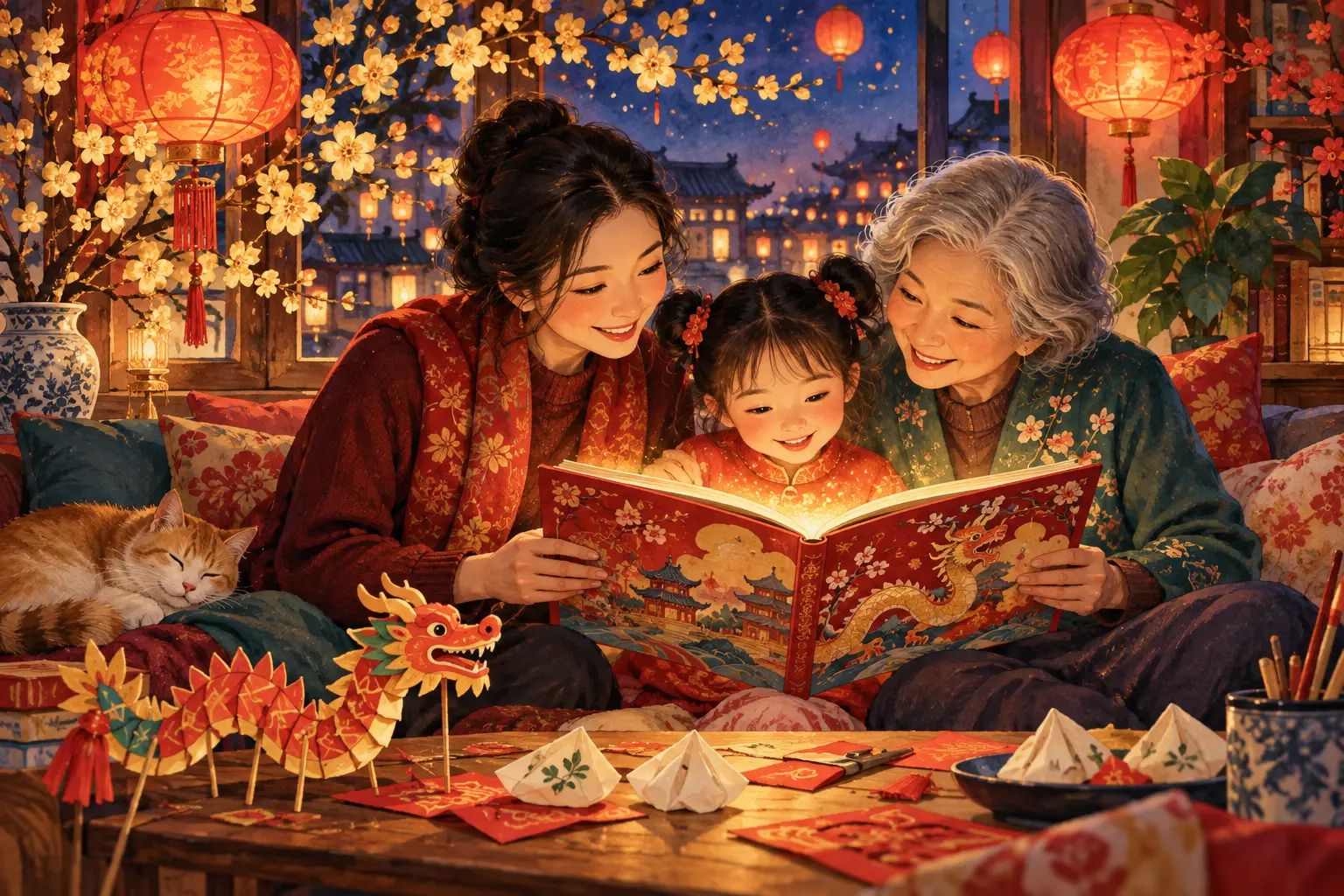
Chinese New Year is a time for family, fresh beginnings and traditions that may look different from one household to another. Lunar New Year is also celebrated across several countries and communities; this guide focuses specifically on the Chinese New Year setting in the Wei Wei stories.
Choose one idea, follow your child’s interest and stop while everyone is still enjoying it. There is no need to complete every activity in one day.
1. Take a slow picture walk
Before you read the words, turn the pages and let the illustrations lead. Notice lanterns, clothing, food, family members, colours and facial expressions. Ask open questions such as, “What feels busy here?” or “Where would you like to look more closely?”
A picture walk gives younger readers time to form their own ideas. It also makes unfamiliar details feel inviting rather than overwhelming. If your child asks about a tradition you do not know, it is fine to say, “Let’s find out together.”
2. Make a safe paper lantern
Fold a sheet of red or gold paper lengthways. An adult can help cut short lines from the folded edge, stopping before the opposite side. Open the paper, curve it into a cylinder and secure the edges. Add a paper handle and decorate it with drawings of flowers, stars or kind wishes.
Keep the lantern decorative: never place a candle or other flame inside it. A battery-operated light can add a glow if an adult supervises.
Afterwards, read Wei Wei and the Lantern That Lost Its Glow and ask, “What helped the lantern—and what helps us feel brighter?”
3. Try a joyful dragon dance
Draw a friendly dragon head on card and attach a long, folded strip of coloured paper. One child can guide the head while another waves a scarf or follows the rhythm. Clap a slow beat, then a fast one. Invite the dancers to freeze whenever the clapping stops.
The dance does not need perfect steps. That is part of the fun—and it echoes the reassuring message of Wei Wei and the Dragon Who Couldn’t Dance: sharing joy matters more than getting every movement right.
4. Play the dumpling patience game
Cut several paper circles and invite children to fold each one in half like a dumpling. Add drawn ingredients inside before folding, or write a kind word for someone in the family. Some folds will be tidy and some will not—and all can belong on the pretend plate.
Talk about how learning takes practice. Wei Wei and the Dumpling That Wouldn’t Fold can help children see that each small attempt is part of getting closer.
5. Collect family wishes
Give everyone a small piece of red or gold paper. Younger children can draw; older children can write a hope for the year ahead or a kind wish for someone else. Place the wishes in an envelope, hang them near the paper lantern or read them aloud together.
Keep the prompt simple: “What would you like more of this year?” Answers might include more playground time, more stories, helping a friend or learning something new.
6. Listen for family memories
If someone in your family celebrates Chinese New Year, invite them to share a memory, favourite food, song or family custom. Let them decide what they want to tell. Children can draw one detail they remember and add it to a family story page.
If the celebration is not part of your own family tradition, approach it with curiosity and respect. Read books created around lived experience, use trusted library resources and remind children that no single family represents everyone.
7. End with one good question
Try just one: “Which part would you step into?”, “How did the character show courage?” or “What kindness did you notice?” Give children time to answer—or let them pass. A relaxed conversation is more valuable than reaching a particular response.
For more prompts that work with any picture book, keep our permanent guide to six story-time questions that help children fall in love with reading close by.
Build your own festival reading basket
Place a Wei Wei story beside your paper lantern, dragon puppet and family wishes. Let your child choose the order: read first, make first or move first. A small basket turns the activities into an invitation children can revisit throughout the season.
The best celebration does not need to be elaborate. One shared story, one thoughtful question and a few handmade details can create a memory that feels bright for much longer than an afternoon.
Explore the Wei Wei series → Browse all books →