All articles · · By Steve Lewis
6 Calm Waiting Activities for Children Aged 3–8
Waiting can feel very different to a child than it does to an adult. A few minutes may seem enormous, especially when a child is excited, worried or unsure what will happen next. These gentle activities give parents and carers practical ways to talk about waiting without demanding perfect patience.
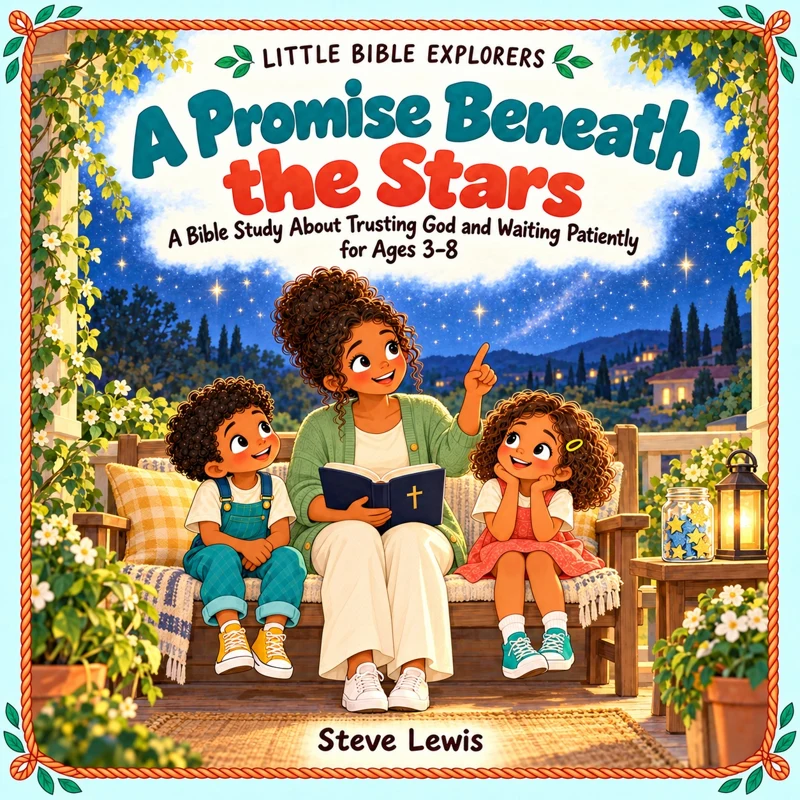
Start with a story that makes room for waiting
A Promise Beneath the Stars is based on Genesis 15:1–6. Under a sky full of stars, Abraham receives a promise that feels almost too big to imagine. The story invites children to talk about worries, waiting and what trust can look like when an answer has not arrived yet.
While reading, you could ask, “What is hard about waiting?” or “Who can you talk to when you feel worried?” Accept a short answer, a long answer or no answer at all. The activities below are original follow-on ideas, not pages taken from the book.
1. Make a now, next and later strip
Fold a sheet of paper into three boxes labelled Now, Next and Later. Draw or write one simple event in each box. For example: now we put on our shoes, next we travel, later we visit Grandma. Point to the strip as the plan moves forward.
For children aged 3–5, use quick pictures and keep the plan to three steps. Children aged 6–8 may like to make their own strip or add a question mark where a time is uncertain. If plans change, alter the strip together rather than pretending the original plan still applies.
2. Create a small waiting-choice card
Make a card showing two or three quiet choices that are genuinely available during a wait: look at a book, draw on a small pad or play an observation game. Let the child choose one rather than being told to keep busy.
The card can live in a bag for journeys or appointments. It does not need to make every wait cheerful. Its purpose is simply to offer a little control when the timing belongs to someone else.
3. Try five stars, five details
Draw five stars on a page. During a short wait, notice one detail for each star: something blue, a sound, a shape, something moving and something still. Children can point, whisper or draw their answers.
Change the prompts to suit the setting. At home, look through a window; outside, choose things that can be seen safely from where you are standing. Stop after five so the game has a clear and predictable ending.
4. Give worries a place to land
Place a small envelope or box near your reading space. A child can draw a worry, dictate it to a grown-up or simply say it aloud before placing a blank slip inside. The grown-up can respond with something honest such as, “I hear that you are worried while we wait.”
Do not promise an outcome you cannot know. If the worry needs action, explain the next practical step in plain language. If the child does not want to use the box, leave it available without pressure.
5. Practise a very short turn wait
Choose a shared activity such as adding blocks to a tower, placing pieces in a puzzle or drawing a road together. Take one turn each. Begin with waits of only a few seconds and name what is happening: “It is my turn now; yours is next.”
Keep the mood cooperative rather than competitive. If waiting becomes upsetting, shorten the turn or do the activity side by side. The aim is to explore the rhythm of taking turns, not to test how long a child can stay silent.
6. Make an after-the-wait plan
Ask, “What would you like to do when the waiting is finished?” Choose one small, realistic idea such as reading a favourite book, having a cuddle or telling someone what happened. Draw the idea on a card and keep it nearby.
Avoid turning the plan into a reward for hiding feelings. A child can still receive comfort after finding the wait difficult. The card is a reminder that the waiting period is only one part of the day.
Keep the conversation gentle
Children do not need to enjoy waiting before they can talk about it. Notice what helped, what did not and what they might choose next time. A calm conversation later may be more useful than asking questions in the middle of a difficult moment.
For a shared story about worries, trust and patient waiting, explore A Promise Beneath the Stars. The digital edition is designed for ages 3–8 and includes discussion questions, a gentle activity and a short prayer.