All articles · · By Steve Lewis
Reading Bible Stories with Children of Different Ages
One child wants to talk about every picture. Another wants to know what happens next. Sharing a Bible story with children of different ages does not have to mean preparing separate lessons—or expecting everyone to respond in the same way. Choose a small part of the story, make the pictures visible and offer each child a way to join in.
Choose one shared starting point
Before you begin, look through the book yourself. Choose a passage you can explain honestly and note any difficult content or grown-up guidance. A short section can be enough for one sitting; you do not need to finish the whole book.
Tell the children what you are going to do: “We’ll look at these pages together, then you can tell me what you noticed.” If you are reading on a screen, place it where everyone can see comfortably. Let a child move closer or change position rather than requiring everyone to sit in a neat row.
Offer different invitations on the same page
Try a simple invitation such as “Show me something you noticed in the picture.” A child can point, name an object, describe what is happening or ask a question. You can then offer a second invitation: “What would you like to know about this part?”
Younger children may enjoy noticing a face or object; older children may want to discuss a character’s decision. These are possibilities, not age-based requirements. An older child can point, and a younger child can ask a complicated question. Follow the response in front of you.
Leave room for answers without making a competition
If one child answers quickly, make space for the others: “Thank you. I’d like to see what everyone else noticed too.” Avoid asking the faster speaker to give hints or correct another child unless that help is wanted.
A child can pass on a question. You might come back later or offer a choice between pointing and drawing. Try not to compare answers or praise one child as the better listener. Shared reading does not need a winner.
Keep older children as participants, not substitute teachers
An older sibling may enjoy reading a sentence or choosing which picture to revisit. Ask first and keep the job optional. They should also have a chance to wonder, disagree or say they do not understand.
If an older child has a question that needs more time, write it down and agree to return to it. Say “I don’t know yet” when that is true. Do not make up an explanation to keep the session moving, and do not promise an answer you have not checked.
A Bible-story companion about making room for everyone
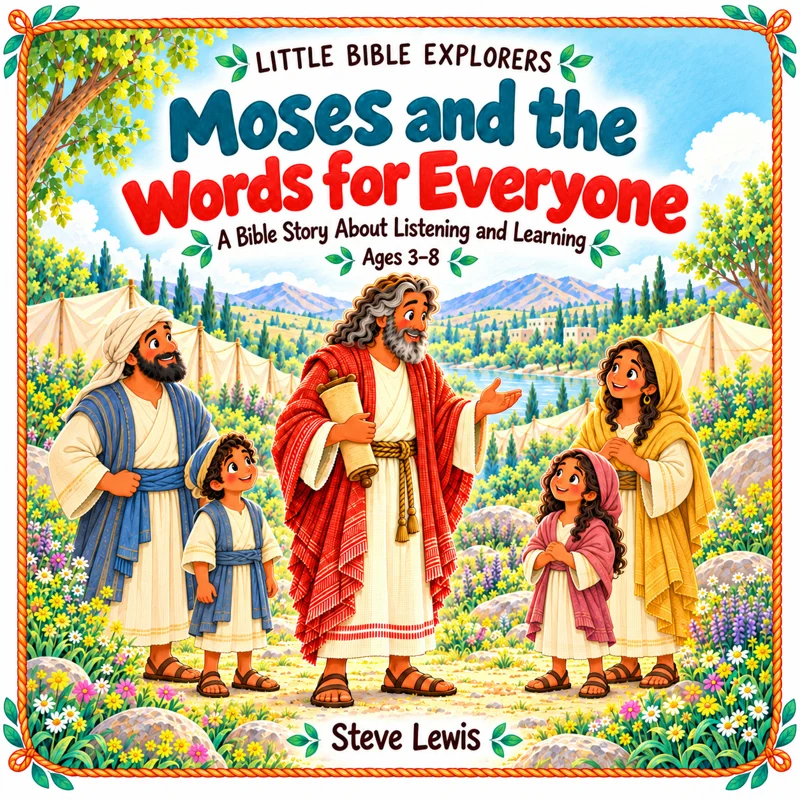
Moses and the Words for Everyone explores selected instructions in Deuteronomy 31:9–13. Its current description explains that Moses gives instructions for a future public reading of God’s law, including children who do not yet know the words. The book depicts those instructions, rather than presenting the future gathering as though it has already happened.
The listing also describes separate modern garden scenes with Eli, Maya and Mum, making room for questions and learning a little at a time. Its themes include listening together, inclusion and asking when something is unclear.
Read the grown-up notes before sharing the historical passage; they explain the seven-year timing, year of release, feast and covenant context. The mixed-age suggestions in this article are additional ideas for home, not a reproduction of the book’s activity pages.
End with a choice instead of another test
Offer one small response: draw a detail, say something you wondered about or choose a picture to look at again. Children do not have to choose the same thing. You can write down a spoken response or accept a gesture without asking for a longer explanation.
If one child wants to stop while another wants to continue, look for a practical arrangement that keeps both supported. You might finish the shared section and offer the longer conversation later. A brief, unfinished session is not a failure.
Decide what to repeat next time
Afterwards, ask yourself what made joining in easier: a better screen position, fewer pages or more time for a response. Keep the part that worked and change only what needs changing. You do not need an elaborate set of activities for every reading.
For a shared-reading book about listening, questions and children being included, explore Moses and the Words for Everyone. Its product page has the current story description, grown-up guidance and digital edition purchase details.