All articles · · By Steve Lewis
Bible Story Kindness Activities for Children Aged 3–8
A story about caring can open a small, useful conversation: what could we do to help someone today? You do not need a craft cupboard or a long lesson. Choose one activity, read together and let your child decide how they want to join in. These ideas are for parents and carers sharing a Bible story with children aged 3–8.
Start with the story, then choose one action
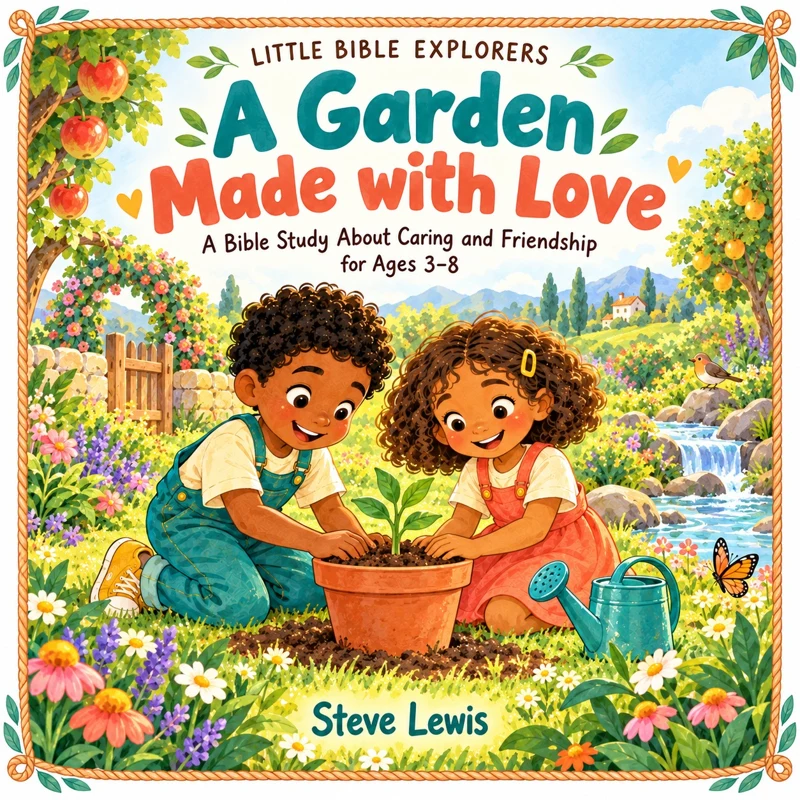
A Garden Made with Love is a Little Bible Explorers digital book described in the shop as a Bible study about caring and friendship. Read the book before choosing an activity, so you can connect the conversation to what is actually on the page. The suggestions below are optional activities for home; they are not a claim that these activities appear in the book.
Ask: “Where did you notice someone caring?” If your child is unsure, look at one illustration together and describe what you can see. There is no need to find a perfect answer.
1. Care for a plant together
Choose a houseplant or a safe spot in the garden. Check the soil together and decide whether it needs water. Offer a small cup or watering can, and help your child pour only what the plant needs.
Talk about how caring can mean paying attention before acting. Try: “What does this plant need today?” Keep the task small enough that your child can take part, with an adult handling tools and any unfamiliar plants.
2. Make a card with a specific kind message
Fold a piece of paper and invite your child to draw something for a family member, neighbour or friend. Help them choose one specific message, such as “Thank you for reading with me” or “I hope you have a lovely day”.
A younger child can dictate their words while you write. An older child may enjoy writing a sentence or deciding how to deliver the card. Ask the recipient’s permission before visiting, and avoid putting a child’s personal details on a public card or photograph.
3. Practise taking turns with an ordinary job
Choose a two-person task: tidying crayons, putting napkins on the table or arranging books. Decide who starts and what each person will do. Explain the plan simply: “You choose one, then I choose one”.
If waiting becomes frustrating, shorten the turns. Caring does not require a child to hide difficult feelings or give away something precious. Help them name the feeling and agree on a fair next step.
4. Notice a small act of care
At the end of the day, invite everyone to name one helpful thing they noticed. It could be someone holding a door, listening, feeding a pet or fetching a drink. Adults can go first so children hear a concrete example.
Use observations instead of labels: “You brought me the pencil I needed” says more than “You were good”. If your child does not want to answer, keep the conversation brief and try another day.
Adapt the activity to your child
For ages 3–5, offer a choice between two simple actions and let drawing or pointing count as a response. For ages 6–8, invite your child to suggest their own action and explain who it might help. These age bands are starting points, not a test of what a child should be able to do.
You can also adapt the task for your child’s access needs. A seated activity, a larger drawing tool, a spoken message or simply choosing what to do can all be ways to take part.
Finish with a gentle question
Ask: “Which kind thing would you like to try again?” You might repeat the same activity next week instead of introducing a new one. The point is to enjoy reading and make one practical connection to family life.
Explore A Garden Made with Love on its book page for the current description and digital edition purchase link. For more conversation ideas, visit our story-time questions guide.